Ask any serious dancer and they will tell you the space matters: the studio, the theatre, the height of the ceiling, the quality of light. All of it shapes how a room feels and how movement exists within it; a space can lift a class or it can hold it back.
At Philadelphia Ballet’s new 43,000 square foot home at 323 North Broad Street, that understanding is built into every detail, from soaring ceilings and expansive natural light to high-quality acoustics and professional sprung floors that absorb impact and support the body. Beautiful grey Marley floors, industrial-style light wood, and clean ballet barres define the studios, creating a space that feels almost effortless to move through.
The scale of the existing three studios and the addition of three more double-height rehearsal studios allows movement to travel more fully, giving dancers greater freedom, range, and confidence in rehearsal. Even the way sound carries through the space has been considered, creating an environment that can quietly shape the quality of the work happening inside it.
You may also like...
An Interview with Federico Bonelli: Gentleman Jack Prepares to Take the Ballet Stage
Federico Bonelli shares his thoughts and the processes behind Northern Ballet's world premiere production about Anne Lister choreographed by Annabelle Lopez Ochoa.
An Interview with Dancers of the Spanish National Dance Company: Reaching for Justice
After 30 years of frozen wages and deteriorating working conditions, dancers of the Spanish National Dance Company are calling for a strike in Madrid.
The building is part of a larger shift. The School of Philadelphia Ballet has also entered a new partnership with the Prix de Lausanne, one of the most important international pathways for young dancers.
With this designation, Philadelphia Ballet joins an international network of leading institutions dedicated to developing the next generation of dance talent, making it only the sixth American company to receive this distinction.
Together, the space and the partnership point to something simple but significant: not only how dancers are trained in Philadelphia, but how that training moves dancers forward step by step to the international stage.
These thoughts stayed with me during a conversation with Davit Karapetyan, Director of the School of Philadelphia Ballet, as we spoke about the school’s future home at the Center for Dance. What he and the leadership team at the School are building feels less like a single project and more like a structure for continuity.
Taken together, the new space and partnership are a way of thinking about training as something that extends beyond the studio. Not just where dancers are made, but how they move into the world, and most significantly, how the work continues long after they leave the studio.
Interview with Davit Karapetyan
‣ What are you most excited about the School of Philadelphia Ballet’s new home on Broad Street?
It’s beautiful. Absolutely incredible. We are very close to moving into the new space, and it will open up opportunities for students from all over the world. When we go to the Prix de Lausanne, and I go every year, I try to recruit students to experience what Philadelphia Ballet and the School can offer, and to help guide them into professional careers.
I was in the building just a few days ago and I was speechless. Truly speechless. We are very lucky to have this new space on Broad Street.
‣ How does the incorporation of a wellness philosophy fit into yours?
We will have two wellness centers: the company will have its own space with specific equipment, and the school will have its own gym and Gyrotonic equipment. (Gyrotonic is a movement practice that uses circular, flowing exercises to build strength, flexibility, and joint mobility. Dancers use it to help prevent injury, decompress the body, and improve alignment and control.)
This gives dancers access to strength training, Pilates, Gyrotonic, and other systems all in one place. It’s an incredible opportunity, and very few schools have this kind of setup and level of support.
Dancers are athletes. These facilities allow dancers to train, recover, and develop all in one place. It changes everything about how we approach training.
‣ Along with the physical training, what is one of the most important qualities you are trying to instill in a School of Philadelphia Ballet dancer?
I am very particular about what I want to see in a dancer. What I see in the studio is one thing, but what we bring on stage must be transformation. When a dancer steps on stage, I ask them:
- Who are you?
- Why are you walking?
- What is your story?
They need to know everything about their performance. I tell them, you do not want to be just good.
Good is not enough anymore. Good may have been enough 20 or 30 years ago, but today you must be great. If you want to be special, you have to move your audience.
‣ So it is not just about technique, but presence and storytelling?
Exactly. I want dancers to come on stage like something is blossoming. Not just steps, but transformation. Most of the audience is not made up of professionals. So the dancer has to connect immediately.
‣ How does the Prix de Lausanne partnership connect to your vision?
I have been part of the Prix de Lausanne for over 25 years. I know the community very well. I was a participant, a jury member, and I still go every year.
From the moment I arrived in Philadelphia, I said we needed to be part of it, and I worked toward that goal. Now, as a partner school, it is a great accomplishment.
But more than that, it connects to something personal for me. I was guided there as a young dancer, and now I want to help the next generation experience the same thing.
‣ How will students engage with the benefits of linking their daily training in Philadelphia to a broader global stage and professional opportunties?
We will coach them, select variations, and guide them through the process.
We already had a student participate a couple of years ago. The goal is not only to win or become a finalist, but to experience it fully. Even if they do not make it to the finals, they gain something important that stays with them for life.
‣ Do many dancers actually complete the pathway from being a student at the School of Philadelphia Ballet student to becoming a Company member?
Yes. About 80 percent of dancers move up through the levels, from school to trainee, to second company, and into the main company. Last year alone, six dancers moved from trainee level into the second company.
‣ And what is the role of the second company?
They perform with the main company, do community engagement performances, and also take part in school productions. Our trainees are also involved in company productions. It is a real system of progression.
When I arrived in 2022, there were only a few dancers. Now the second company has grown significantly, and the structure continues to expand.
‣ When you think about your leadership over the past few years, what has been your guiding priority for the School?
To change things in the best interest of our students, while not minimizing their training, because they are here to learn and improve their abilities.
In the past three and a half years, I’ve seen a tremendous improvement in our students. Some came in and, over time and through consistent work, they have truly changed. Now some of them are in our second company. That’s a huge accomplishment.
I’m very proud of our faculty and what they believe in, and in me. It’s not always easy. There are ideas I bring forward where people may initially say,
“I don’t know if we can make that work.”
But we work toward it. And what we’ve built is a phenomenal group.
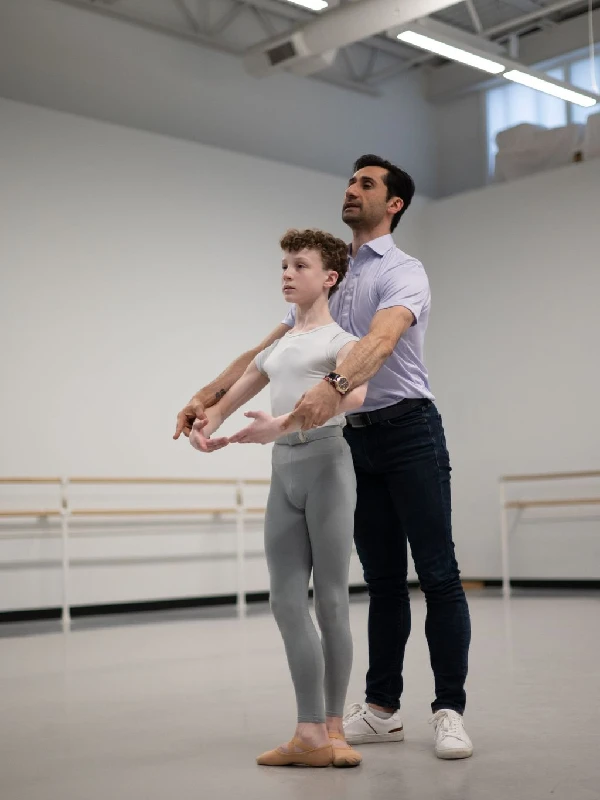
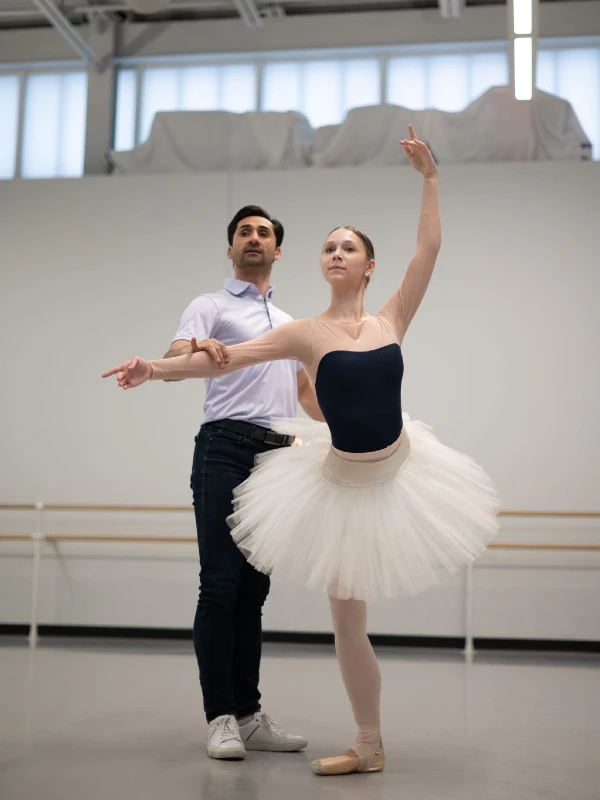
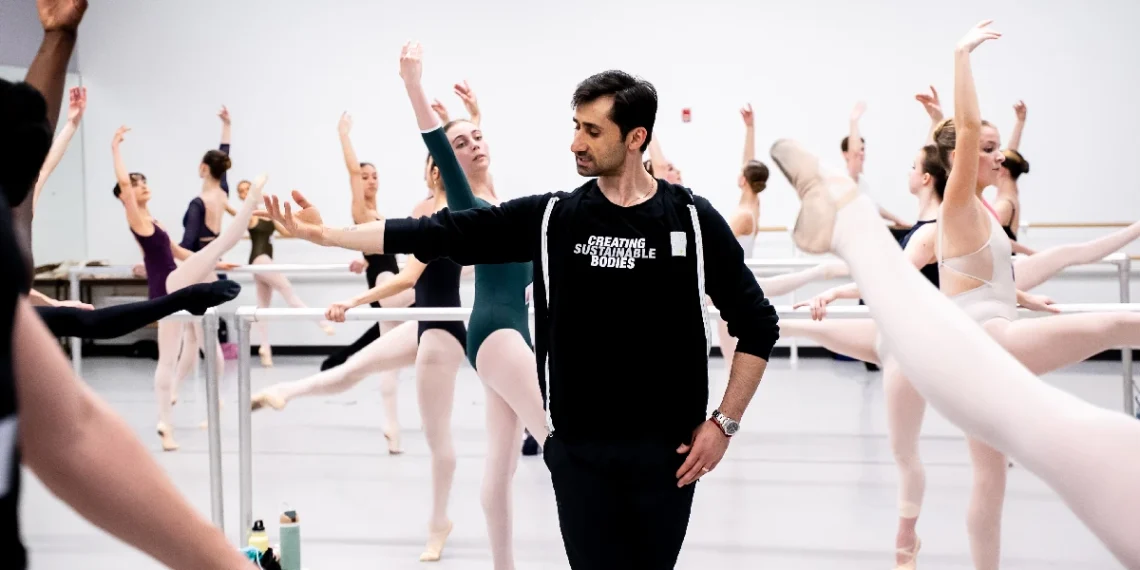
Featured Image of School of Philadelphia Ballet‘s Director Davit Karapetyan teaching class. Photo by Helm Creative Studio.